
Blog · Guide
AI Receptionist for Auto Salvage Yards, Junkyards and Pull-A-Part Businesses
The phone rings while your forklift operator is pulling a transmission and your counter person is helping a customer in the yard. It is a body shop looking for a driver side door for a 2019 Ford F-150, a tow company with a fresh total loss, or a homeowner asking if you buy scrap metal today. Whoever answers first gets the parts sale, the teardown contract, or the load of copper. In the salvage business, voicemail is the same as hanging up on money. An AI receptionist answers every call, checks inventory style, quotes scrap prices, books yard appointments, and captures commercial leads while your crew keeps the yard moving.
By Samana Rob · Published August 18, 2026 · Contains affiliate links
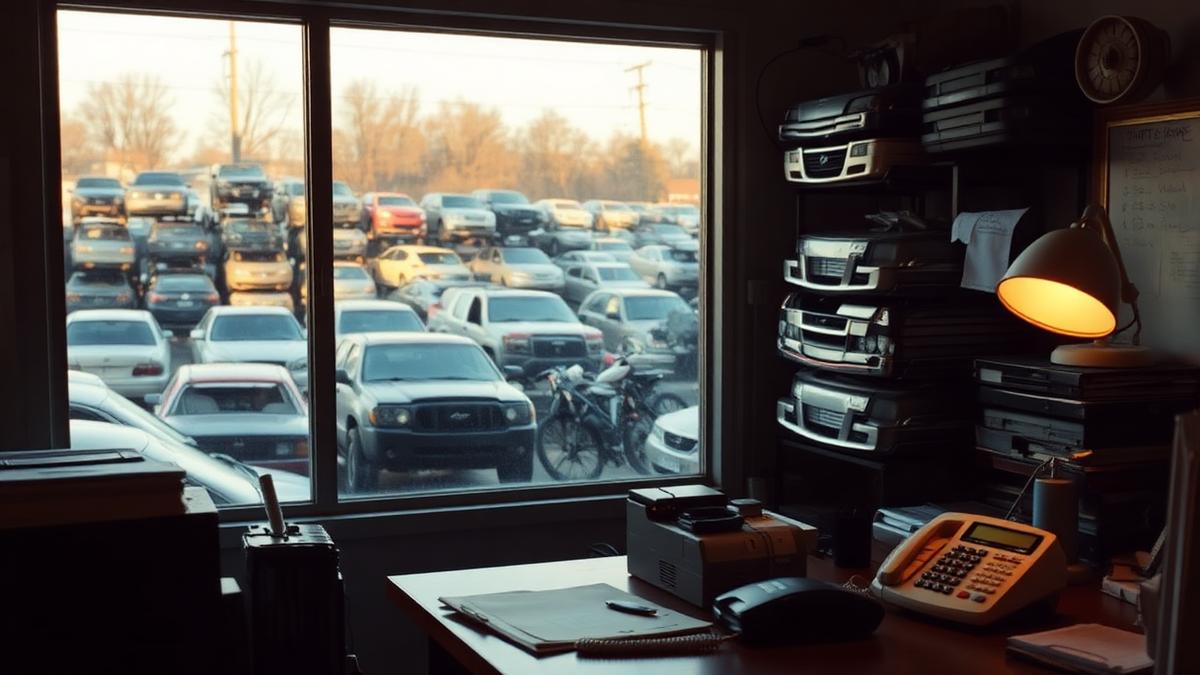
The yard is loud, the counter is busy, and the phone keeps ringing
A salvage yard is not a quiet place.
Forklifts beep, torches spark, impact guns rattle, and customers wander the rows looking for a matching bumper.
Your counter staff is quoting a water pump, your puller is waist deep in an engine bay, and the phone is ringing with somebody who needs a door, a transmission, or a price on aluminum rims.
If that call goes to voicemail, the body shop calls the next yard. The tow company takes the wreck to your competitor. The homeowner with a truckload of copper drives past your sign.
An AI receptionist answers every ring, no matter how loud the yard gets or how many customers are already in line.
Parts calls are the lifeblood of the business
Most salvage revenue comes from repeat buyers. Body shops, mechanics, and small dealerships call you first when they know you answer.
They need a left fender for a 2017 Camry, a transfer case for a Silverado, or a complete interior for a Jeep Wrangler.
They do not have time to chase you. They have three other yards on their speed dial and a customer waiting in their lobby.
The assistant answers, captures the exact vehicle and part, and sends a clean ticket to your parts desk.
When your team calls back, they already know what to pull and what to quote.
The right intake turns a parts call into a parts sale
Salvage parts are not like new parts. You cannot just ask for the part name and hang up.
You need the year, make, model, body style, engine, transmission, paint code, and whether the caller wants OEM or aftermarket fit.
You need to know if the donor vehicle was hit in the front, rear, or side, because that tells you if the part is any good.
The assistant asks all of this in a normal conversation, so your puller goes straight to the right row instead of wandering the yard with a phone in one hand.
Salvage yard call intake checklist
- Year, make, model, trim, and body style
- Engine size and transmission type
- Part needed and condition preference
- VIN if available, especially for engine and transmission swaps
- Paint code or color for body panels
- Whether the caller is a shop, dealer, or retail customer
- Timeline, same day, next day, or just pricing
- Best callback number and whether text updates are okay
- Delivery or pickup preference
- Warranty expectations and core exchange needs
With that information complete, your counter can quote confidently and the yard can pull the right part the first time.
Scrap metal price calls are easy money if handled right
Every day people call asking what you pay for copper, aluminum, steel, or a catalytic converter.
Those calls are quick, but they add up. If nobody answers, they take their load to the yard that does.
The assistant reads your current price sheet, gives the caller today's rate, and asks what they are bringing and roughly how much.
It logs the material type and estimated weight so you know whether a pickup truck or a flatbed is pulling in.
Pull-a-part yards need appointment control
A self service yard can only handle so many people at once.
Too many customers means picked over rows, long lines at the gate, and frustrated do-it-yourselfers.
The assistant books yard visits by time slot, confirms the entry fee, explains what tools customers can bring, and sends a text with hours and directions.
It also captures the vehicle the customer wants to pull from, so your team can flag if that row is closed or the car has already been stripped.
Commercial teardown leads are worth the whole month
A tow company, insurance adjuster, or fleet manager with five, ten, or twenty total loss vehicles is not going to leave a voicemail.
They are going to call every salvage yard in the county until someone answers with a plan.
The assistant captures the number of vehicles, the location, title status, fluid status, and whether they need an immediate buy figure.
It escalates the lead to your commercial buyer and creates a follow up ticket so nothing gets lost in a notepad.
One of those contracts pays for a year of phone coverage.
Cost comparison for salvage yards
| Option | Monthly cost | 24/7 coverage | Captures vehicle details |
|---|---|---|---|
| atAnswer AI | $720 flat | Yes | Yes |
| Counter staff overtime | $1,500 to $3,000 | No | Sometimes |
| Live answering service | $400 to $1,000 plus overage | Yes | Message only |
| Voicemail | $0 | No | No |
Getting live before the next busy Monday
- Load your common makes, models, and part categories into the knowledge base
- Set current scrap metal prices and update them as the market moves
- Write triage rules for parts calls, scrap calls, yard visits, and commercial teardowns
- Connect your parts desk and commercial buyer notifications
- Forward the main line and after hours line, run test calls, and start answering every ring
Most salvage yards are live within a day or two, and the first fleet teardown lead captured on a Sunday usually pays for the whole year.
Related reading
Ready to stop losing calls?
Try the AI receptionist that answers every call for one flat fee
No per minute charges. No missed leads. atAnswer covers your phones and website chat 24/7, and you can hear it for yourself on a live demo call.
$720/mo flat rate · Cancel anytime · Setup in minutes
Frequently Asked Questions
Can the AI handle parts availability calls?
Yes. It captures the year, make, model, engine size, part needed, and condition preference. It can also ask for the VIN when it matters, then creates a ticket so your parts puller checks the yard and calls back with a real answer and price.
Can it quote scrap metal prices?
Yes. It reads your current price sheet for steel, aluminum, copper, brass, and catalytic converters, gives the caller today's rate, and logs the material type and estimated quantity so you know what is coming in.
Will it work for pull-a-part and self service yards?
Yes. It books yard visits by time slot, explains your entry fee and tools policy, confirms the vehicle the customer wants to pull from, and sends a text with directions and hours.
Can it capture commercial teardown leads?
Yes. It asks how many vehicles, the location, whether titles are available, if there are hazardous fluids, and your preferred callback window. That lets you dispatch a wrecker or flatbed with the right paperwork.
How does it handle tow companies calling with fresh wrecks?
It treats those as urgent commercial leads. It captures the tow company name, vehicle details, location, and whether they need an immediate buy figure or want to drop the car after hours.
How much does it cost?
$720 a month flat with unlimited calls. One commercial teardown or a busy week of parts sales covers the cost.
24/7 call coverage · One flat monthly rate
Stop Letting Parts Sales Roll to Voicemail
Hear how atAnswer handles a real salvage yard call.
Affiliate link · Pricing, offers, and features can change at any time.