Blog · Guide
AI Receptionist for Butcher Shops and Delis: Take Every Order While You Are Behind the Counter
Behind a meat case you are wearing gloves, handling product, and serving somebody who is standing right in front of you. The phone rings and there is no version of answering it that is clean, fast, or safe. So it rings out, and the catering tray order that would have paid for the whole afternoon goes to the grocery store deli down the road.
By Samana Rob · Published August 6, 2026 · Contains affiliate links
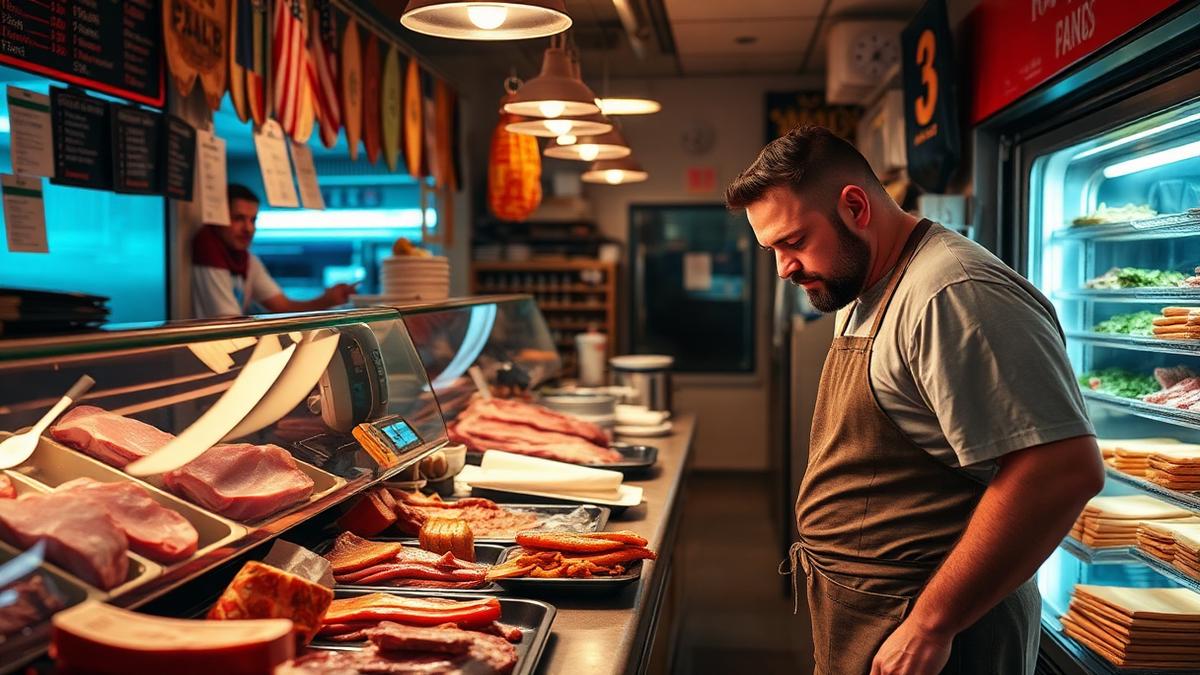
Gloves on, phone ringing, customer waiting
Every shop with a service counter runs into the same conflict. The person standing in front of you gets priority, as they should, and the phone rings through that entire transaction until whoever is calling gives up and moves on. the SBA guide on managing small business finances is a fair place to start if you have never put a number on that leak.
On a Saturday morning that can be a dozen unanswered calls before noon. Nobody logs them, nobody counts them, and the shop just feels like it had a normal day even though several hundred dollars of orders never landed.
Hiring someone purely to answer a phone is hard to justify for a shop with tight margins, and part timers rarely know your product well enough to take a proper special order anyway.
The orders worth chasing
Not every call is equal. A question about hours costs you nothing to miss. A twelve pound prime rib preorder or a sandwich platter for an office of thirty is a different story entirely.
- Holiday roasts, turkeys, and hams with a pickup date
- Catering trays and sandwich platters with headcounts
- Custom cuts and specialty butchering requests
- Bulk or freezer orders and quarter beef inquiries
- Standing weekly orders from local restaurants
- Event smoking and barbecue orders
These are exactly the calls that need a few minutes of careful detail gathering, which is exactly what a busy counter cannot give them. An AI line gives every one of them the same unhurried attention.
What a complete special order sheet looks like
The difference between a usable order and a headache is specificity. A note that says roast for Saturday is a guessing game. A structured intake sheet is something you can hand straight to the back and act on.
A good AI intake captures the cut and grade, the weight or number of portions, thickness or trim preferences, whether it should be tied, boned, or frenched, the pickup date and time, and the customer callback number.
Because the whole call is transcribed, the customer own words are on file too. If there is a dispute later about what was ordered, you have the recording rather than a memory of a busy Friday afternoon.
Holiday preorder season, handled
For most shops the six weeks before Christmas and the two weeks before Thanksgiving decide the year. Preorder calls arrive constantly, and the shop is simultaneously at its busiest at the counter.
Paper preorder slips get lost, doubled up, or written in handwriting nobody can read at five in the morning on the day of pickup. That is not a staffing failure, it is a system failure under load.
An AI line collects every preorder into one structured list with dates, sizes, and contacts, applies your cutoff automatically once you hit capacity, and gives you something you can actually sort and plan production against.
A real Saturday, run two ways
Old way. Between ten and noon the shop takes nineteen calls. Six are answered, thirteen ring out. Of the thirteen, two were catering platters and one was a quarter beef inquiry, all three of which went elsewhere and never called back.
New way. All nineteen calls are answered on the first ring. Eleven were simple questions handled instantly from the knowledge base. Five became structured order sheets. Three were escalated to the owner cellphone because they involved pricing on market items.
Same shop, same staff, same Saturday. The only thing that changed was that nobody had to choose between the customer at the counter and the customer on the line.
Simple setup for a small shop
- Write your standard cuts, tray sizes, and lead times
- Load hours, location, and preorder cutoff dates
- Define which items need owner pricing confirmation
- Build your special order and catering intake fields
- Point the line to the AI during counter rush hours
- Read a week of transcripts and refine the answers
Most shops start with rush hours and after hours only, then extend to full coverage once they see how many orders were quietly slipping away during the middle of an ordinary week.
Related reading
Ready to stop losing calls?
Try the AI receptionist that answers every call for one flat fee
No per minute charges. No missed leads. atAnswer covers your phones and website chat 24/7, and you can hear it for yourself on a live demo call.
$720/mo flat rate · Cancel anytime · Setup in minutes
Frequently Asked Questions
Can an AI receptionist take a meat special order?
Yes. It captures the cut, the weight or quantity, thickness or trim preferences, the pickup date and time, and the customer name and number, then sends you a clean order sheet you can hand to the back.
What about catering trays and platters?
It walks the caller through tray size, headcount, meat and cheese selections, sides, dietary notes, and the pickup or delivery window, which is far more detail than a rushed counter note usually captures.
Will it quote prices?
Only the prices you load into it. Market priced items are handled by capturing the request and having you confirm the price, so nobody gets quoted a number you cannot honor that week.
How does it help with holiday preorders?
Thanksgiving, Christmas, and Easter generate weeks of preorder calls. The AI takes every one of them at once, applies your cutoff dates, and keeps a complete list rather than a stack of paper slips.
Can it answer basic questions like hours and whether we have something in stock?
It answers anything you load into its knowledge base, including hours, parking, whether you do custom butchering, deposit rules, and preorder cutoffs. Live stock questions get routed to you.
Does it work after hours?
Yes, around the clock. Plenty of customers plan a weekend cookout on a weeknight evening, and that is precisely when a small shop is closed and the call is lost.
What does it cost a small shop?
A flat $720 a month with unlimited calls. One recovered catering order a week typically covers most of it, and holiday weeks do not add a penny.
24/7 call coverage · One flat monthly rate
Take Every Order Without Leaving the Counter
Hear how atAnswer handles a real deli call, 24/7, $720 a month flat.
Affiliate link · Pricing, offers, and features can change at any time.