
Blog · Guide
AI Receptionist for Propane and Heating Oil Companies: Answer Every Out of Fuel Call
Fuel delivery has a call pattern unlike almost any other trade. Nothing happens for weeks, then the temperature drops overnight and every phone line in the office lights up at the same time. The people calling are cold, worried, and often out of fuel entirely, and they will keep dialing down the list until somebody picks up and gives them a delivery date.
By Samana Rob · Published August 7, 2026 · Contains affiliate links
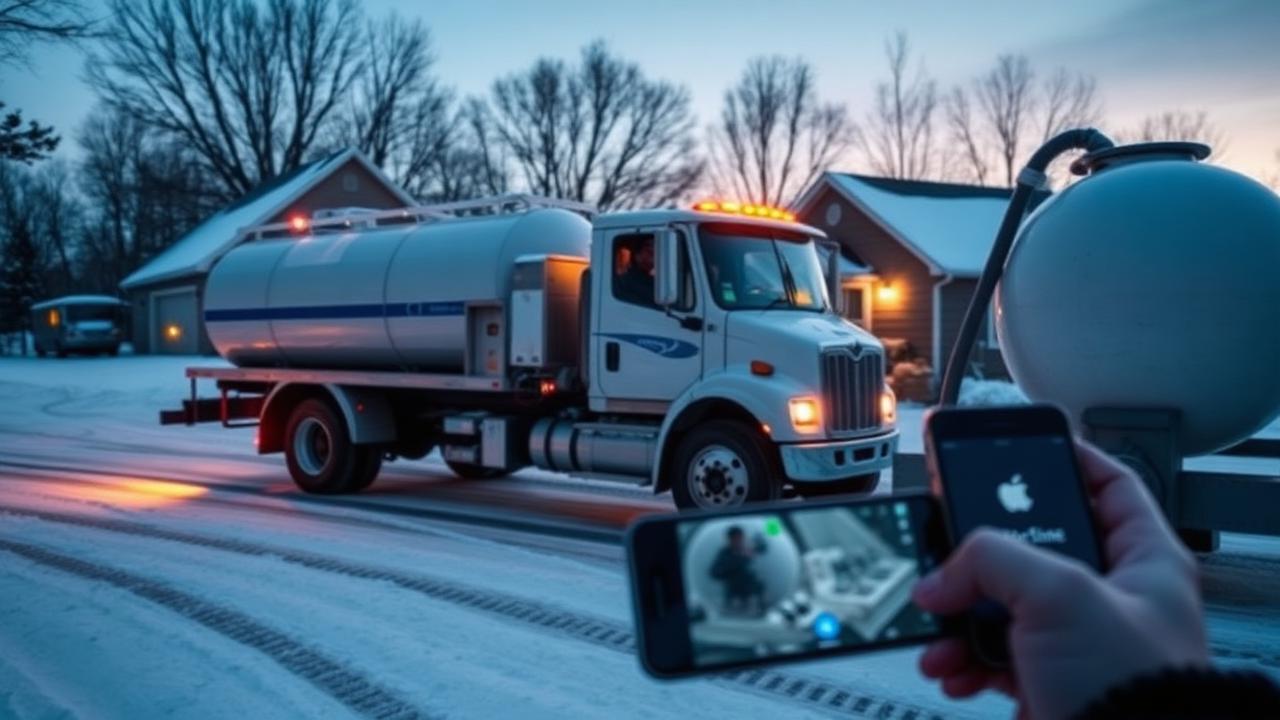
The first cold night decides your whole season
Fuel demand does not build gradually. It arrives on a single night when the temperature falls twenty degrees below normal and thousands of tanks that were fine last week suddenly are not. Every dealer in the county gets hit at the same hour by the same weather.
Residential heating demand tracks weather far more closely than it tracks anything else, which the U.S. Energy Information Administration heating fuels data shows plainly across every winter on record. Your phone volume is a weather chart with a delay of about six hours.
That is why a fuel business cannot staff its phones the way a normal office does. There is no headcount that makes sense for a business where Tuesday brings nine calls and Wednesday brings ninety, and where most of the ninety land between eight at night and six in the morning.
An out of fuel call is not a sales inquiry
When somebody calls because their tank reads empty and the house is getting cold, they are not shopping. They want a human voice, a date, and some reassurance that they are not going to wake up to frozen pipes. That call needs to be answered on the first attempt.
If it rings out, the caller does not wait for a callback. They open a search, find the next dealer, and often end up switching accounts permanently over one unanswered night. A single delivery customer is worth thousands of dollars over the years they stay with you.
The painful part is that you never learn which calls you lost. There is no record of the person who dialed at one in the morning, heard four rings and a voicemail greeting, and hung up to call your competitor instead.
What good fuel delivery intake captures
Dispatch cannot route a truck from a name and a phone number. The information gap is what turns a two minute call into three callbacks the next morning, and it is entirely avoidable with a fixed script.
- Whether the home currently has heat, asked first
- Service address, and whether it differs from the billing address
- Fuel type, tank size, and where the tank sits on the property
- Current gauge percentage, read out loud by the customer
- Automatic delivery or will call, and account number if known
- Driveway conditions, gate codes, and dogs on the property
- Minimum delivery amount the customer is willing to take
- Best callback number and whether texting is acceptable
Every one of those answers arrives on the intake sheet in the same place every time. Your dispatcher reads it in ten seconds and decides the route without picking up the phone at all.
Triage rules that protect your drivers
The reason most fuel dealers hesitate about after hours answering is the fear of being woken for nothing. A driver who gets called out at two in the morning for a tank sitting at thirty percent will not stay on call very long.
A well configured AI line solves that with rules rather than judgment. No heat with a gauge under ten percent pages the on call driver. A tank between ten and twenty five percent gets a first thing in the morning slot. A routine top off goes into the standard queue with no page at all.
You can layer household risk on top of that. If the caller mentions an infant, an elderly resident, or a medical device that needs a warm house, the call escalates regardless of the gauge reading, because that is a decision you should make in advance rather than at three in the morning.
A January cold snap, hour by hour
Picture a small dealer with four trucks and two office people. The forecast calls for a low of minus fifteen on Thursday, and by Wednesday evening the phone starts. Under the old setup the office closed at five and the voicemail box filled up by nine.
Thursday morning the two office staff spend the first three hours just listening to messages and calling people back, half of whom have already booked with somebody else overnight. The trucks sit idle until routes get built at ten, which costs an entire morning of deliveries.
With an AI line answering, those same overnight calls arrive as fifty two complete intake sheets sorted by urgency. The dispatcher builds routes at six in the morning from finished data, the trucks roll at seven, and the office spends the day confirming rather than chasing.
The cost math for a small fuel dealer
An after hours answering service that bills by the minute looks affordable in October. Then a two week cold stretch hits, call volume multiplies, and the invoice that arrives in February is several times what you budgeted for the whole quarter.
Hiring an overnight office person is worse on paper. Wages, payroll costs, and shift differential for a role that is genuinely busy maybe eight weeks a year rarely pencils out for a dealer running four or five trucks.
A flat $720 a month removes the arithmetic. Your worst week of the winter and your quietest week of the summer produce the same invoice, and every account you keep from switching over a missed night is straight upside on top of that.
Setting it up before the season starts
- Load your current posted price, minimum delivery, and service area boundaries
- Write the escalation rules by gauge percentage and heat status
- Define your on call rotation and how each driver wants to be paged
- Load answers to your fifteen most common questions, including budget plans
- Connect the intake to your dispatch or routing software
- Point the main line to the AI after five, then expand once you read the transcripts
Most dealers start with nights and weekends only, since that is where the bleeding is worst. After a month of reading transcripts and seeing the intake quality, a lot of them move daytime overflow onto the same line so the office can work the counter without the phone interrupting every four minutes.
What it should never do
Fuel is a safety business, and the script has to respect that. If a caller mentions a gas smell, a hissing line, or a carbon monoxide alarm, the correct behavior is an immediate instruction to leave the building and call the fire department, followed by a page to your on call staff.
It should also never invent a delivery window it cannot verify, never guarantee a price for a future load, and never talk a worried customer out of an emergency. Capturing the situation accurately and handing it to a person is always the safer default.
Related reading
Ready to stop losing calls?
Try the AI receptionist that answers every call for one flat fee
No per minute charges. No missed leads. atAnswer covers your phones and website chat 24/7, and you can hear it for yourself on a live demo call.
$720/mo flat rate · Cancel anytime · Setup in minutes
Frequently Asked Questions
Can an AI receptionist tell the difference between a no heat emergency and a routine delivery?
Yes, because it asks the questions in a fixed order. Whether the house currently has heat, whether the tank reads empty, whether there are small children or elderly residents, and whether the customer is on automatic or will call. Those answers drive the escalation rule you set.
Will it wake up my on call driver for every single call?
No, and that is the point. You define what counts as urgent. Everything else lands in the morning queue as a complete delivery request, so the driver sleeps through the top off calls and only gets woken for real emergencies.
What information does it collect for a delivery?
Service address, tank size and location, current gauge reading, whether the tank is leased or owned, driveway and gate access notes, dog on property, account number if they have one, and a callback number.
Can it handle price per gallon questions?
It reads your current posted price from the knowledge base you control, and it is set to never negotiate, never promise a locked rate, and never quote a contract price. Contract and budget plan conversations are booked with your office.
Does it work during a cold snap when calls spike ten times over?
That is the scenario it handles best. Every line is answered in parallel, so the fortieth caller at eleven at night gets the same greeting and the same intake as the first one did at four in the afternoon.
Can it push into our dispatch or routing software?
Yes. Completed intakes go out by webhook, email, or direct integration into common fuel dealer platforms, so the request shows up where your dispatcher already works instead of in a separate inbox.
What does it cost compared to an after hours answering service?
A flat $720 a month with unlimited calls. Per minute answering services bill you hardest during exactly the weeks you take the most calls, which is a strange way to be punished for a cold winter.
24/7 call coverage · One flat monthly rate
Answer Every Out of Fuel Call, Even at 3am
Hear how atAnswer handles a real fuel delivery call, 24/7, $720 a month flat.
Affiliate link · Pricing, offers, and features can change at any time.