Blog · Guide
AI Receptionist for Security and Alarm Companies: Answer Every Call Without Waking the Owner
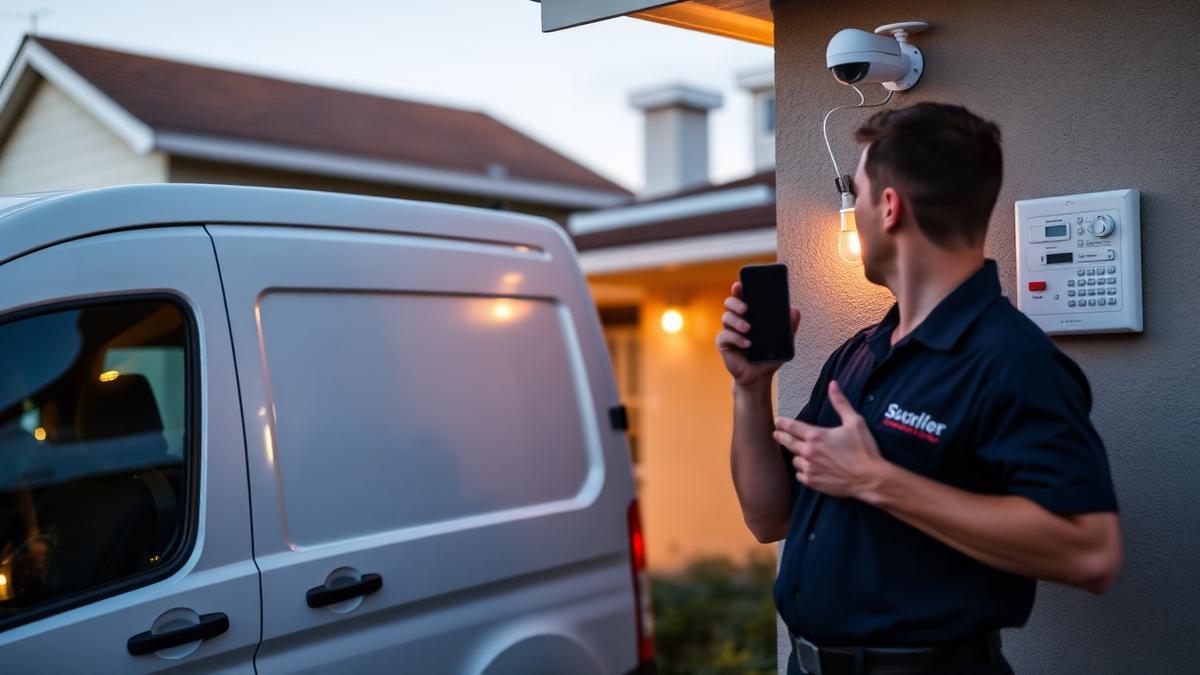
Security work does not keep office hours. A keypad beeps at two in the morning, a camera goes offline the night before a store owner leaves town, and a new customer calls on a Sunday because they just had a break in on their street. Somebody has to answer, and for most small alarm companies that somebody is the owner, at every hour, forever.
By Samana Rob · Published August 6, 2026 · Contains affiliate links
The 2 a.m. problem every alarm company has
Security is a trade where the phone rings at hours no other trade tolerates. A panel chirps, a customer cannot remember a code, a camera drops offline, and none of it waits until Monday because the whole product is peace of mind. the Bureau of Labor Statistics profile for alarm systems installers gives useful context on the staffing side of this trade.
The frustrating part is that most of those calls are not emergencies. A low battery chirp and a genuinely unsecured commercial building both wake you up the same way, and you cannot tell them apart until you have already answered and lost the sleep.
Over a few years that grind wears people down. Owners either stop answering at night, which quietly damages the reputation they built, or they keep answering and pay for it in health and family time.
Triage is the feature that matters
The value of an AI receptionist in this trade is not just picking up. It is asking the three or four questions that sort a call into a bucket before anyone on your team is disturbed.
- Is the site currently secure or standing open
- Is this a monitored commercial account or a residential system
- Is the panel in alarm right now or simply beeping
- Has law enforcement already been dispatched
- When did the issue start and has anything changed since
- Is there a service contract on the account
Those answers decide everything. A residential low battery becomes a morning callback with a part on the truck. A commercial site with a failed panel and an open door pages the on call technician within seconds.
The new customer call you cannot afford to miss
People shop for security systems immediately after something scares them. A neighborhood break in, a package theft, a business burglary. That urgency means they call in the evening, on a weekend, and they call several companies in a row.
Whoever answers first usually gets the site walk, and the site walk usually gets the job. A voicemail returned on Monday afternoon reaches someone who already signed with a competitor on Saturday morning.
An AI receptionist qualifies these leads properly at the moment they call. Property type, door and window counts, camera interest, monitoring preference, and timeline all get captured, and the appointment is booked before the caller hangs up.
A storm week walkthrough
A regional power outage hits on a Tuesday night. Panels across your customer base start reporting AC loss, and two hundred people decide to call the company whose sticker is on their front window, all within about four hours.
With one on call phone that is an impossible night. Most callers get voicemail, a handful get through, and by morning your inbox is a wall of anxious messages that all need sorting before any real work can start.
With an AI line, every caller is greeted immediately, told what an AC loss message means, and given the expected behavior once power restores. Only the accounts with a genuine failure get escalated, and by morning you have a clean, sorted list instead of chaos.
What the cost comparison looks like
| Option | Monthly cost | 24/7 | Triage rules |
|---|---|---|---|
| atAnswer AI | $720 flat | Yes | Yes, fully custom |
| Per minute answering service | $400 to $1,800 | Yes | Basic scripts only |
| Dedicated night dispatcher | $4,000 plus | One shift | Yes |
| Owner cellphone | Free and exhausting | Yes | Only after waking up |
The comparison that matters is not just dollars. It is whether the owner can sleep through a Tuesday night without missing the one call that genuinely needed a truck rolled before sunrise.
Rolling it out safely
- Write your escalation matrix on paper first, urgent versus routine
- List the ten most common after hours questions and their answers
- Connect your dispatch or CRM so calls land as work orders
- Define who gets paged, in what order, and after how long
- Start with after hours only, keeping daytime on your office line
- Review transcripts weekly for the first month and tighten the rules
Most companies find within two weeks that the number of nights the owner gets woken drops sharply, while the number of captured leads goes up. That combination is unusual, and it is the reason this trade adopts phone automation faster than most.
Related reading
Ready to stop losing calls?
Try the AI receptionist that answers every call for one flat fee
No per minute charges. No missed leads. atAnswer covers your phones and website chat 24/7, and you can hear it for yourself on a live demo call.
$720/mo flat rate · Cancel anytime · Setup in minutes
Frequently Asked Questions
Can an AI receptionist tell an emergency from a routine call?
It follows the rules you write. Questions like whether the panel is beeping, whether a site is currently unsecured, and whether the caller is a monitored commercial account determine whether the call escalates immediately or gets scheduled.
Will it wake me for every after hours call?
No, and that is the point. Routine questions about codes, low battery beeps, or billing get handled or queued for morning, while a genuinely unsecured site or a commercial outage pages the on call technician right away.
Can it book installation and service appointments?
Yes. It qualifies the property type, system brand, and issue, then books against your live calendar or dispatch software so the technician arrives with the right information.
What information does it capture on a service call?
Site address, account holder name, panel or camera brand and model, what the system is doing, when it started, whether the site is currently secure, gate or access notes, and the best callback number.
Does it handle new system quote requests?
Yes. It qualifies square footage, number of doors and windows, whether cameras or access control are wanted, monitoring interest, and timeline, then books a site walk with your sales tech.
Can it integrate with our dispatch or CRM?
Every call pushes into your CRM or dispatch tool with the full transcript and structured fields, so nothing lives only in someone memory of a two in the morning phone call.
What does coverage cost?
One flat rate of $720 a month with unlimited calls. Traditional after hours answering services bill per minute or per call, which punishes you during storm weeks and power outages when volume spikes.
24/7 call coverage · One flat monthly rate
Stop Being the After Hours Answering Service
Hear how atAnswer triages a real alarm call, 24/7, $720 a month flat.
Affiliate link · Pricing, offers, and features can change at any time.